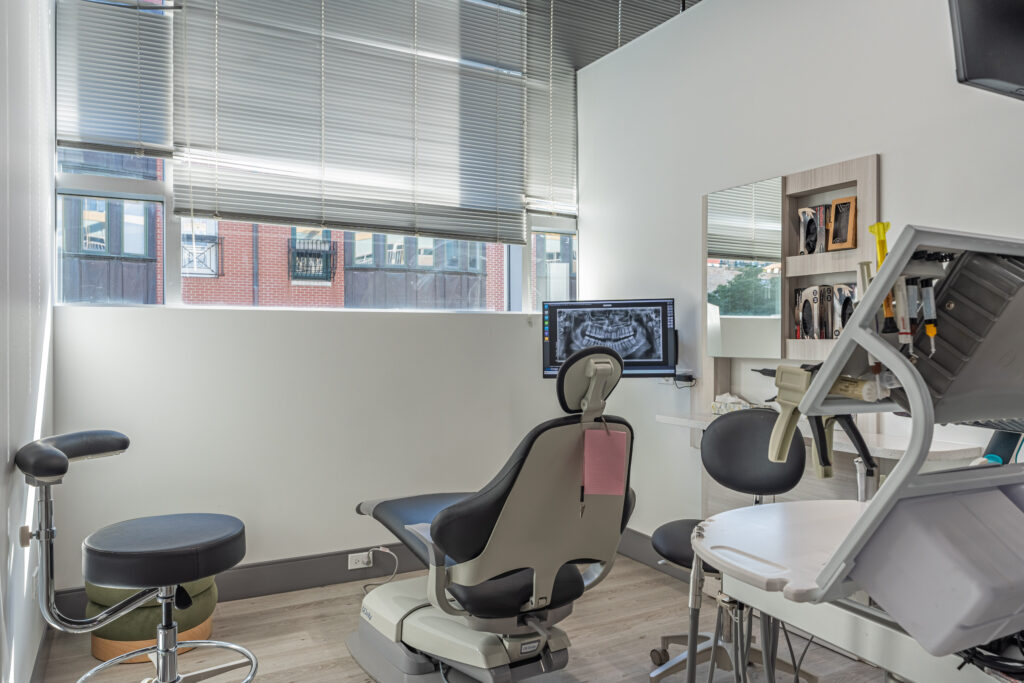
Experienced dental professionals that work around your schedule. In-network, in-house, and always here when you need us.
When tooth pain becomes severe or a dental infection develops, a root canal may be the most effective way to save your natural tooth and relieve your discomfort. Root canal therapy is one of the most common dental procedures performed to preserve natural teeth. Despite their reputation in popular culture, modern root canal therapy procedures are relatively comfortable and similar to getting a routine filling. This tooth-saving treatment addresses infection and damage that have reached the inner pulp chamber of your tooth, where the nerves and blood vessels reside.
At Dental Group of Chicago, we perform root canal procedures with a gentle touch and advanced techniques to ensure your comfort throughout the process. This treatment is one of the many restorative options available through our general dentistry services, and our extended hours from 8 a.m. to 8 p.m. on weekdays plus availability on Saturdays make it easier to schedule this important treatment without disrupting your busy schedule. Our doctors are committed to preserving your natural teeth whenever possible and providing relief from dental pain.
A root canal procedure in South Loop, Chicago involves removing infected or inflamed pulp tissue from inside a tooth to eliminate infection and prevent future complications. The pulp contains nerves, blood vessels, and connective tissue that help form the tooth during development. When this tissue becomes infected due to deep decay, cracks, trauma, or repeated dental procedures, it can cause severe pain and lead to abscess formation if left untreated.
During the procedure, your dentist or endodontist (a root canal specialist) removes the damaged pulp, carefully cleans and shapes the inside of the root canal system, then fills and seals the space to eliminate the source of infection while maintaining the natural tooth structure. Each tooth can have one to four of these canals depending on its location and type, and afterward a crown is typically placed over the tooth to protect it and restore full function and your smile.
Recognizing the symptoms of an infected tooth can help you seek timely treatment before the condition worsens, though some patients notice no symptoms at all. Watch for any of the following signs:
If you experience any of these symptoms, schedule a dental appointment promptly. Early intervention can mean the difference between saving and losing a tooth.
Understanding what happens during a root canal can help ease any anxiety you might feel about the procedure. At Dental Group of Chicago, we’ve refined our approach to make the experience as comfortable as possible. Most root canals can be completed in one or two appointments, depending on the complexity of your case and the extent of the infection, and we use modern rotary instruments to make treatment more efficient. According to the American Association of Endodontists, root canal treatment is a well-established, effective way to relieve pain and save a natural tooth.
A thorough examination and x-rays assess the extent of infection and help plan your treatment.
Local anesthesia numbs the area, and a dental dam isolates the tooth to keep it clean and dry.
A small access opening is created and the infected or inflamed pulp tissue is carefully removed.
The canals are cleaned, shaped, and disinfected, then filled with a biocompatible material called gutta-percha.
A filling seals the access opening, and a crown or other restoration is placed to protect the tooth and restore full function.

Dr. Alexander Reznikov, DDS completed his dental education at the University of Illinois College of Dentistry and has since built a reputation as a Top 5% Invisalign Provider nationally and a Top Implant Provider for 2025. His broad continuing education across multiple dental specialties means patients receive comprehensive, precise care for procedures like root canal therapy, often without needing a referral elsewhere.
Dr. Reznikov built his practice around what he calls “unreasonable hospitality,” pairing exceptional clinical care with a genuinely welcoming environment. Patients at Dental Group of Chicago also enjoy a comfort menu that includes heated blankets, a coffee bar, and Netflix, because how you feel during treatment matters as much as the outcome.

Choosing to save your natural tooth through root canal therapy offers numerous advantages over extraction. Understanding these advantages can help you make an informed decision about your dental health. Here is how the two options compare:
| Factor | Root Canal Treatment | Tooth Extraction |
|---|---|---|
| Natural tooth | ✓ Preserves your natural tooth structure | Tooth is removed entirely |
| Chewing function | ✓ Maintains normal bite and chewing | May require an implant or bridge to restore function |
| Adjacent teeth | ✓ Helps prevent shifting of neighboring teeth | Neighboring teeth may shift over time |
| Appearance | ✓ Preserves your natural smile | Requires a replacement to restore appearance |
| Treatment time | Usually completed in one to two visits | Extraction is quick, but replacement options take more time |
A root canal allows you to save your natural tooth, preserving normal chewing function, bite alignment, appearance, and overall comfort. Keeping your natural tooth also helps protect neighboring teeth from unnecessary wear and strain.
While dental implants and bridges are effective replacement options, preserving a natural tooth is often the most conservative and beneficial choice for long-term oral health.
Root canal treatment removes infected pulp tissue, eliminating the source of pain and helping prevent the infection from spreading to other areas of the mouth, face, or body.
Prompt treatment can reduce the risk of abscesses, bone loss, swelling, and other complications while supporting proper healing and protecting your overall health.
The cost of root canal therapy depends on several factors, including which tooth is being treated, the number of canals involved, and whether a crown is needed afterward. Most dental insurance plans provide at least partial coverage for root canal treatment since it is considered a tooth-saving procedure rather than an elective one. Our team verifies your benefits before treatment begins so you know what to expect.
For patients without insurance or with plans that only cover part of the cost, Dental Group of Chicago offers financing options to help make treatment manageable. Visit our insurance and financing page to learn more about accepted plans and payment options, or contact our South Loop or Bucktown office to discuss your specific case.
At Dental Group of Chicago, we understand that dental procedures can cause anxiety for many patients. That’s why we prioritize your comfort throughout the root canal process. Our extended hours from 8 a.m. to 8 p.m. on weekdays and availability on Saturdays ensure you can schedule your treatment at a time that works for your busy life. We also offer after-hours appointments for dental cleanings, emphasizing our commitment to preventative care that helps you avoid more extensive procedures.
Our skilled dental team combines gentle techniques with advanced technology to make your root canal experience as smooth and comfortable as possible. If you’re dealing with severe pain and need to be seen right away, our dental emergency team can often accommodate same-day visits. Don’t continue to suffer from tooth pain or risk losing a natural tooth that could be saved. Contact us today through our contact form to schedule your consultation and evaluation.
Yes, root canal therapy is among the most common dental procedures performed in the United States, with millions completed each year to save natural teeth from extraction.
Most patients experience significant healing within a few days, with complete healing of the internal tooth structure occurring over several weeks. Any discomfort typically subsides within 3-5 days.
Many general dentists have the expertise to perform root canal therapy. However, complex cases may be referred to an endodontist, a specialist who focuses specifically on endodontic treatment.
The local anesthesia used during the procedure typically wears off within 2-4 hours. Your dentist will advise you to avoid eating until the numb feeling subsides completely.
Absolutely! Root canal therapy preserves your natural tooth, which is essential for maintaining a healthy, functional smile and preventing the complications associated with tooth loss.
Teeth become susceptible to infection from deep decay, trauma, cracks, or repeated dental procedures that compromise the protective layers of the tooth.
Yes, our practice welcomes new patients. We encourage you to review our service offerings and schedule a consultation to discuss your dental health needs.
Our experienced team provides high-quality dental care in a comfortable, welcoming environment. Whether you need preventive, cosmetic, or restorative treatment like root canal therapy, we’re here to help. Contact us today to schedule your consultation.
1556 S Michigan Ave, Suite 200
Chicago, IL 60605
Monday – Friday
Saturday
Sunday
8 AM – 8 PM
8 AM – 2 PM
Closed