Experienced dental professionals that work around your schedule. In-network, in-house, and always here when you need us.
Missing teeth do more than affect your smile. They can shift your remaining teeth out of alignment, accelerate jawbone loss, and make everyday tasks like eating and speaking harder than they should be. A dental bridge is one of the most reliable, time-tested ways to close those gaps permanently — no surgery required in most cases, and no gaps left to invite further problems.
At Dental Group of Chicago, our team offers dental bridges as part of a full range of tooth replacement options for patients throughout the South Loop and Bucktown. We are in-network with most PPOs, open Monday through Friday from 8 a.m. to 8 p.m. and Saturdays from 8 a.m. to 2 p.m., and we handle most procedures in-house so you never have to run between multiple offices. Here is what you need to know about dental bridges and which type may be right for you.
A traditional dental bridge is anchored on both sides by the natural teeth. This type of bridge is often used when you have healthy natural teeth on both sides of the missing teeth. A dental crown is placed on each of these support teeth (known as abutment teeth) to help provide additional stability for the bridge to attach to. A row of prosthetic teeth, known as pontics, fills gaps in the mouth to create a balanced smile and restore proper function.
Similar to a traditional bridge, a cantilever bridge also attaches to a natural tooth for support. However, a cantilever bridge only attaches to a natural tooth on only one side. A dental crown is still placed on the natural tooth for additional support. This type of bridge is typically used when only healthy teeth are on one side of the empty space or when adjacent teeth on both sides aren’t suitable for support. Because of this, a cantilever dental bridge is not as stable as a traditional bridge and requires proper care to maintain.
A Maryland dental bridge uses wings instead of crowns as anchors. These metal wings are bonded to the back of the neighboring teeth to attach the dental bridge. This type of bridge is commonly used when you are missing a row of front teeth, as it is more aesthetically pleasing to keep the natural teeth compared to dental crowns. However, it provides less support than a traditional dental bridge and isn’t ideal for the forces placed on the back teeth from chewing. This less invasive option protects your adjacent natural teeth from extensive preparation.
Rather than applying crowns to the anchoring teeth on either side of the dental bridge, an implant-supported bridge uses dental implants as supports. An implant-supported dental bridge can be performed when you have three or more missing teeth in a row. Two dental implants are placed in the furthest empty spaces with the bridge between them. However, this procedure often has a longer healing period, as the dental implants have to fully fuse to the jawbone before the dental bridge can be placed.
Not only does a dental bridge restore an aesthetically pleasing smile by replacing a missing row of teeth, but it also provides therapeutic benefits by restoring the functionality of the teeth. Some common benefits of getting a dental bridge include the following:
A dental bridge may also be a viable alternative to dental implants when you lack sufficient bone density and are not a good candidate for bone grafting surgery. A traditional, cantilever, or Maryland dental bridge can eliminate the need for surgery, making bridges an ideal option for anyone who prefers a more minimally invasive approach. It is important you discuss your concerns and health history with your dentist to design the best treatment plan for your specific circumstances.


At Dental Group of Chicago, our doctors understand every patient deserves a treatment plan that works within their schedule. Most procedures are handled in-house, so you are never sent between multiple offices. The bridge process typically unfolds over two to three visits.
During your first visit, your dentist examines your teeth, reviews your health history, and takes imaging to determine the right bridge type for your needs. Your neighboring teeth are then prepared for crowns or metal wings, and digital scans are taken so your custom restoration can be crafted in the lab. A temporary bridge protects your teeth during this time, usually two to four weeks. At your final visit, your dentist places and adjusts the permanent bridge for a secure fit, proper alignment, and a comfortable bite. According to the National Institutes of Health, dental bridges are a well-established solution for partial tooth loss when proper oral hygiene is maintained.
Missing teeth should not have to slow you down, and at Dental Group of Chicago, they do not have to. Whether you are dealing with one missing tooth or several, our team creates personalized bridge solutions designed around your specific needs, your schedule, and your budget. We are in-network with most PPOs, open evenings and Saturdays, and our top-rated dental team handles every step of your care in-house.
If you are ready to restore your smile with a custom dental restoration, we would be glad to help you get started. We also offer dental implants and other replacement options if a bridge is not the right fit. To schedule a consultation at our South Loop or Bucktown location, call our office or fill out our contact form today.

With proper care and excellent oral hygiene, a well-made dental bridge can last between 10 to 15 years or even longer. The longevity of your bridge depends on several factors, including the type of bridge, the health of your abutment teeth, and how well you maintain your oral health. Regular dental checkups, proper brushing and flossing techniques, and avoiding habits like teeth grinding can help extend the life of your restoration. Your dentist in Chicago will monitor your bridge during routine visits and make any necessary adjustments to ensure it continues functioning properly.
Yes, modern dental bridges are designed to look completely natural and blend seamlessly with your existing teeth. Your dentist will carefully match the color, shape, and size of the artificial teeth to your surrounding teeth, ensuring a harmonious appearance. The custom bridge is crafted in a dental lab using high-quality materials and detailed impressions of your mouth, resulting in a restoration that mimics the appearance and function of natural teeth. Most people won’t be able to tell the difference between your bridge and your real teeth.
Yes, one of the primary benefits of a dental bridge is restoring your ability to chew comfortably and eat your favorite foods. After an initial adjustment period of a few days to a week, you should be able to eat normally. The bridge helps distribute bite forces evenly across your teeth, preventing bite problems and making chewing more efficient. However, it’s advisable to avoid extremely hard or sticky foods that could damage the bridge. Maintaining good oral health practices and attending regular checkups will help ensure your bridge continues to function properly for years to come.
The process of getting a dental bridge is generally not painful, as your dentist will use local anesthesia during the preparation phase to ensure your comfort. You may experience some minor sensitivity or discomfort in your gums and adjacent teeth after the procedure, but this typically subsides within a few days. Over-the-counter pain relievers can help manage any temporary discomfort. The minimally invasive nature of bridges, especially Maryland bridges, means less trauma to your nearby teeth and gums. Your dentist will provide detailed aftercare instructions to help you heal comfortably and will make any necessary adjustments if you experience persistent discomfort.
While both options replace missing teeth, they differ in structure and placement. A dental bridge uses surrounding teeth or adjacent teeth as anchors and is cemented or bonded in place, making it a less invasive option that doesn’t require surgery. Dental implants, on the other hand, involve surgically placing titanium posts into the jawbone to support individual artificial teeth. Bridges are often preferred when patients want to avoid surgery, have insufficient bone density for implants, or need to replace missing teeth quickly. During your consultation, we’ll help determine which option best suits your needs and goals.
There are four main types of dental bridges: Traditional bridges use crowns on adjacent teeth to support the replacement tooth. Cantilever bridges attach to only one adjacent tooth when space is limited. Maryland bridges use metal or porcelain wings bonded to the backs of adjacent teeth, preserving more natural tooth structure. Implant-supported bridges anchor to dental implants rather than natural teeth, offering superior strength and durability. Your dentist will recommend the best type based on your specific situation and oral health needs.
Proper bridge care is essential for longevity and includes brushing twice daily with fluoride toothpaste, using floss threaders or water flossers to clean under the bridge, and maintaining regular dental checkups and cleanings. Avoid chewing hard foods like ice or candy, and don’t use your teeth as tools. The area under the bridge requires special attention since food particles can accumulate there. We’ll provide specific cleaning instructions and may recommend special brushes or rinses to keep your bridge and surrounding teeth healthy.
Main alternatives to dental bridges include single tooth dental implants for individual missing teeth, partial dentures for multiple missing teeth, and complete dentures for full mouth restoration. Implants offer superior longevity and don’t affect adjacent teeth, while partial dentures are removable and more affordable initially. The best choice depends on your oral health, bone density, number of missing teeth, budget, and personal preferences. During your consultation, we’ll discuss all options and recommend the most suitable treatment for your specific needs.
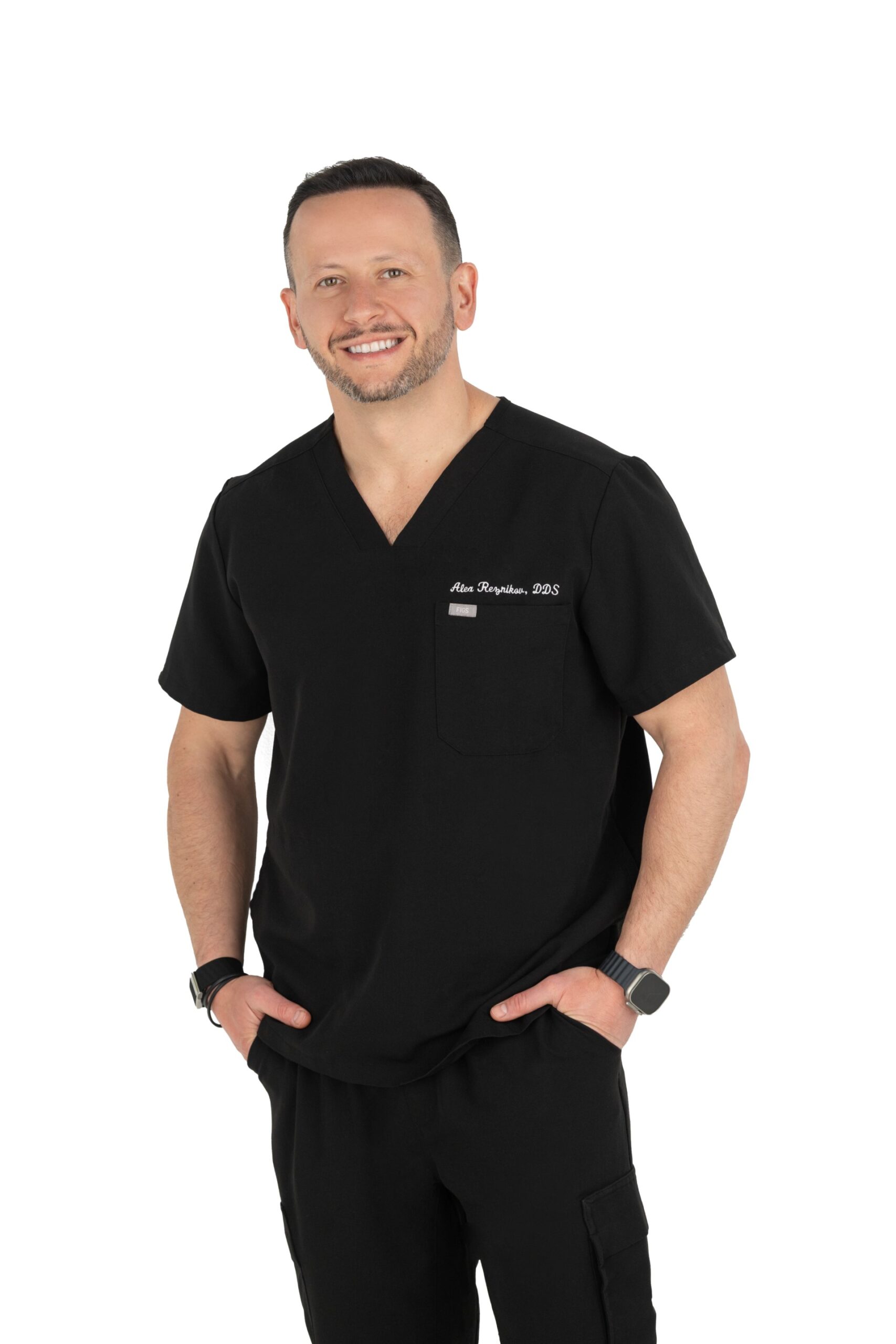
Dr. Reznikov completed his dental education at the University of Illinois College of Dentistry and has since accumulated extensive continuing education across multiple dental specialties. His commitment to broadening his clinical scope means patients at Dental Group of Chicago receive comprehensive care — including complex restorative cases — without being referred elsewhere.
Dr. Reznikov built his practice philosophy around what he calls "unreasonable hospitality": exceptional clinical care paired with a genuinely welcoming environment. Whether you are replacing a single missing tooth or multiple teeth with a custom dental bridge, his team is here to guide you from your first consultation through your final fitting. Learn more about Dr. Reznikov or contact our office to schedule your visit.
When you walk into Dental Group of Chicago, the first thing you notice is that this is not a rushed, assembly-line practice. Our team takes time to understand your situation, explain your options, and build a plan around your life. We offer a comfort menu — heated blankets, eucalyptus wipes, Netflix, a coffee bar, neck pillows, and fresh fruit — because we believe great dental care and a genuinely comfortable experience should go together.
We are a dentist-owned practice, in-network with most PPOs, and open Monday through Friday from 8 a.m. to 8 p.m. and Saturdays from 8 a.m. to 2 p.m. — so you never have to miss work to take care of your teeth. Whether you need a dental exam, are managing gum disease, or are ready to replace missing teeth with a bridge, we are here for you.

1556 S Michigan Ave, Suite 200
Chicago, IL 60605
Monday – Friday
Saturday
Sunday
8 AM – 8 PM
8 AM – 2 PM
Closed