Replace one missing tooth or several with implant care planned around your gums, bone, and health, close to home in Bloomingdale.
A gap from a missing tooth changes more than your smile, since it can make chewing awkward and let nearby teeth drift out of place. Some people start hiding their smile in photos, while others quietly give up foods they used to enjoy. If a removable appliance hasn’t felt right, or you want something fixed, implants are worth a close look.
Dental Group of Bloomingdale is part of Dental Group of Chicago and provides implant care for one missing tooth or several. Dr. Alex Reznikov is a University of Illinois College of Dentistry graduate, Dr. Marwan Abbas belongs to the American Dental Association and the Chicago Dental Society, and Dr. Simardeep Hehar trained at the University of Detroit Mercy. As a dentist in Bloomingdale, we do most treatment in-office.
A dental implant has three parts. First comes the implant body, which sits in the jawbone where the tooth root used to be. Next is the abutment, a connector that attaches to the implant body and rises through the gums. On top goes the crown, bridge, or denture you see when you smile. Most implants are a small titanium post, and the bone heals around it over time.
According to the U.S. Food and Drug Administration’s consumer guide to dental implants, titanium and zirconium oxide are the materials used in most implant systems. The agency adds that healing around the implant body can last several months or more, and patients often wear a temporary until it is done.

Dr. Reznikov earned his dental degree from the University of Illinois College of Dentistry and has completed hundreds of hours of continuing education. He leads Dental Group of Chicago and co-owns our Bloomingdale office with his father, Dr. Vladimir Reznikov.

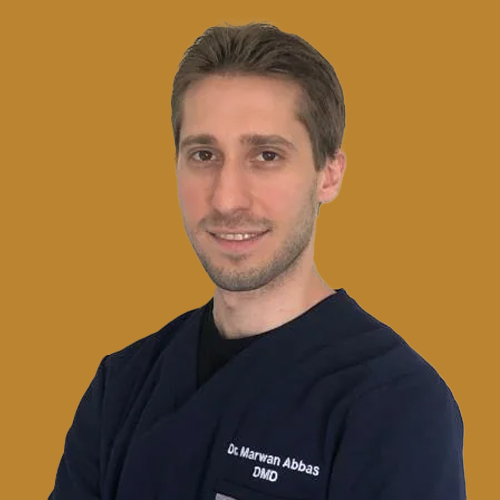
Dr. Abbas earned his DMD from the University of Illinois at Chicago in 2018 and joined our Bloomingdale team in 2020. He is a member of the American Dental Association and the Chicago Dental Society.

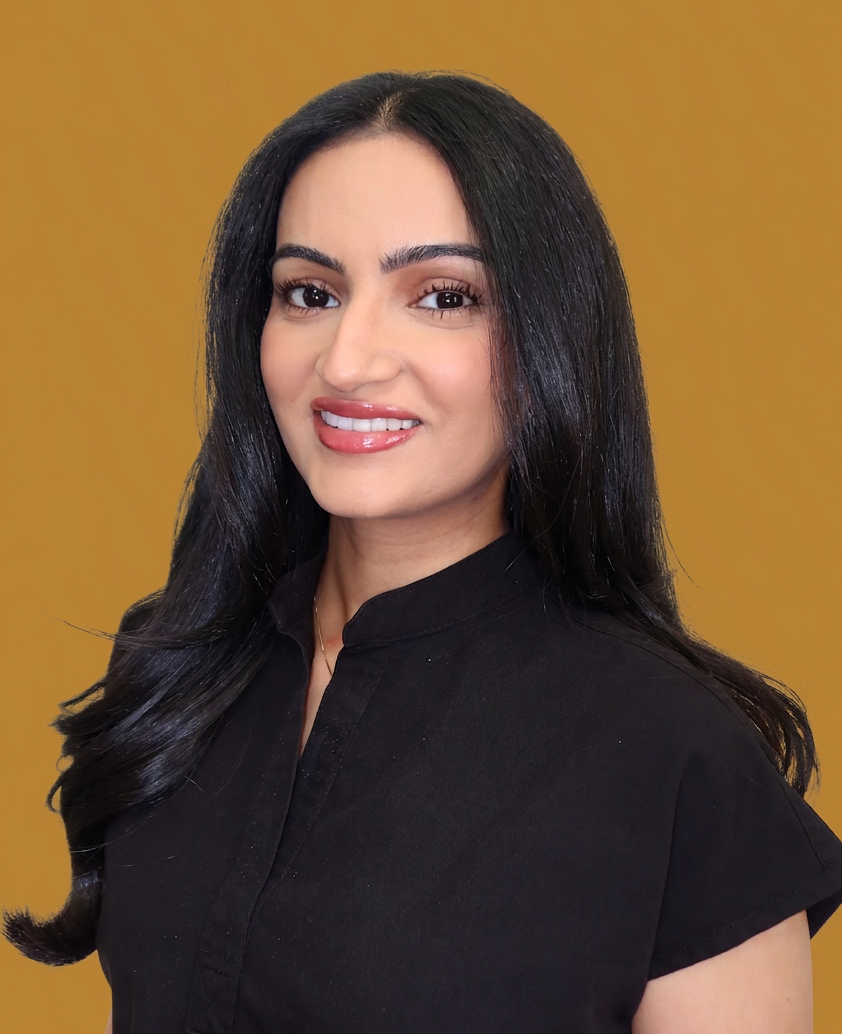
Dr. Hehar graduated from the University of Detroit Mercy School of Dentistry in 2024 and began her career in California. She focuses on building trust and making patients of all ages feel heard and comfortable.
Implants, bridges, and dentures can all fill a gap, but they attach in different ways and ask different things of your other teeth. A bridge leans on the teeth beside the gap and a denture rests on the gums, while an implant replaces the root itself. According to the FDA, implants can help prevent jawbone shrinkage and help the teeth next to the gap stay stable.
Our page on dentures in Bloomingdale covers immediate and partial options, and bridges are part of our general and cosmetic dentistry in Bloomingdale. If you are choosing between a bridge and an implant for one tooth, ask your dentist how each option affects the teeth on either side.
Many adults with a missing tooth can be considered for implants, and three things shape the answer.
An implant needs healthy gum tissue around it, so we treat gum problems first when needed. Our periodontal care in Bloomingdale includes deep cleanings and other gum treatment.
An implant needs enough bone to hold it. If the bone has thinned, bone regeneration may rebuild it first. If a tooth still has to come out, extraction with bone preservation can protect the area for a future implant.
The FDA says general health plays a part in whether implants suit you, how quickly you heal, and how long an implant may remain in place. Smoking can interfere with healing and long-term success, and people whose diabetes is not under control may face a higher chance of an implant failing from infection, so tell your dentist about any health conditions during planning.
Often the answer is not yet rather than no. Gum treatment or bone regeneration may come first, and some patients start once a health condition is under better control. If implants still are not the right fit, a bridge or denture can fill the gap.
Here is what each stage looks like, starting with your first visit.
Your dentist examines your teeth and gums, takes digital X-rays to check the bone, and talks through your options and goals. You leave knowing which approach fits and what comes next, so bring any questions about healing, cost, or timing.
Local anesthesia numbs the area, and nitrous oxide sedation in Bloomingdale can help if you feel anxious. Same-day implant options may be possible when your bone and gums allow it. Our post-surgery care instructions cover eating, rinsing, and when to call us.
Once the implant body has healed, the abutment and your final crown, bridge, or denture are attached. Your dentist then checks how your teeth come together and adjusts the fit.
The FDA lists possible problems such as a loose abutment screw, infection, and numbness after surgery if a nerve is affected. Before any MRI or X-ray, let the imaging team know you have implants. Careful planning with digital X-rays and treating gum problems first help lower these risks.
How long an implant stays in place depends on your overall health and home care, according to the FDA. Daily brushing and flossing around the implant, plus regular cleanings and checkups, let us keep an eye on the gums and bone that support it. Call us if the gum near an implant bleeds, swells, or feels sore, or if the tooth feels loose.
Your total depends on how many teeth you are replacing and whether steps like bone regeneration are part of the plan. Our team reviews your dental benefits and explains your costs before treatment begins. Your estimate comes after the exam, once we know what your plan includes.
Payment plans and other financing options can spread treatment into smaller amounts. Our insurance and financing options page explains how each one works.
Our doctors explain each stage in plain terms and answer your questions before anything starts. You can read about our Bloomingdale dentists ahead of your consult.
Dental microscopes with a direct light and digital X-rays help us plan and check our work, and electric handpieces run quieter than air drills. With most treatment done in-office and visits until 8 p.m. Monday to Thursday, your care stays close to home.
Often, yes, though the bone in that spot may have thinned over time. An exam and digital X-rays show whether you have enough bone or need bone regeneration first.
Many plans take several months or longer from placement to final teeth, because the implant body needs time to heal in the bone. Your timeline depends on your health and whether you need extra steps first.
Same-day implant options may be possible when your bone and gums allow it. After an exam and imaging, your dentist can tell you whether that approach fits your case.
Local anesthesia numbs the area, and nitrous oxide can help if you feel anxious. Mild soreness for a few days afterward is common.
Yes. Implant-stabilized dentures snap onto implants for a steadier fit, which can make eating and speaking feel more secure.
The FDA says smoking can interfere with healing and with how well an implant holds up over time. Tell your dentist if you smoke so we can plan with that in mind.
Our office is at 140 N. Bloomingdale Rd, Bloomingdale, IL 60108. We welcome implant patients from Addison, Glendale Heights, Roselle, and Carol Stream.
In many cases, no. A temporary is often placed while the implant body heals, and your dentist can tell you what to expect for your own plan.
Select any Book Appointment button on this page to choose a time, or call our office, and our team will confirm your visit.
Dr. Alex Reznikov grew up in the Chicago suburbs in a family of dental professionals. He leads Dental Group of Chicago, has completed hundreds of hours of continuing education, and encourages every doctor on our team to keep learning.
A missing tooth doesn’t have to stay missing. Patients from Bloomingdale, Addison, Glendale Heights, Roselle, Carol Stream, and Itasca are welcome at our office on Bloomingdale Road. To find out whether implants fit your mouth, request an implant consultation in Bloomingdale.
140 N. Bloomingdale Rd
Bloomingdale, IL 60108
Monday – Thursday
1st & 3rd Saturday
Friday & Sunday
8 AM – 8 PM
8 AM – 2 PM
Closed